Brazil’s Distrato Law: What Can Be Retained After a Property Cancellation?
Cancelling an off-plan property purchase in Brazil is not just a signature on a termination form. Law 13,786/2018, known as the Distrato Law, sets different…
Imovitec · July 18, 2026
Cancelling an off-plan property purchase in Brazil is not just a signature on a termination form. Law 13,786/2018, known as the Distrato Law, sets different rules according to the project type, the buyer’s possession, brokerage disclosure, property charges, and the existence of a patrimônio de afetação.
The figures everyone remembers are 25% and 50%.
They matter, but they do not settle every case. Law 13,786/2018 amended Law 4,591/1964, which governs real-estate incorporations, and Law 6,766/1979, which governs land subdivisions. Article 67-A applies to incorporations; Article 32-A applies to loteamentos.
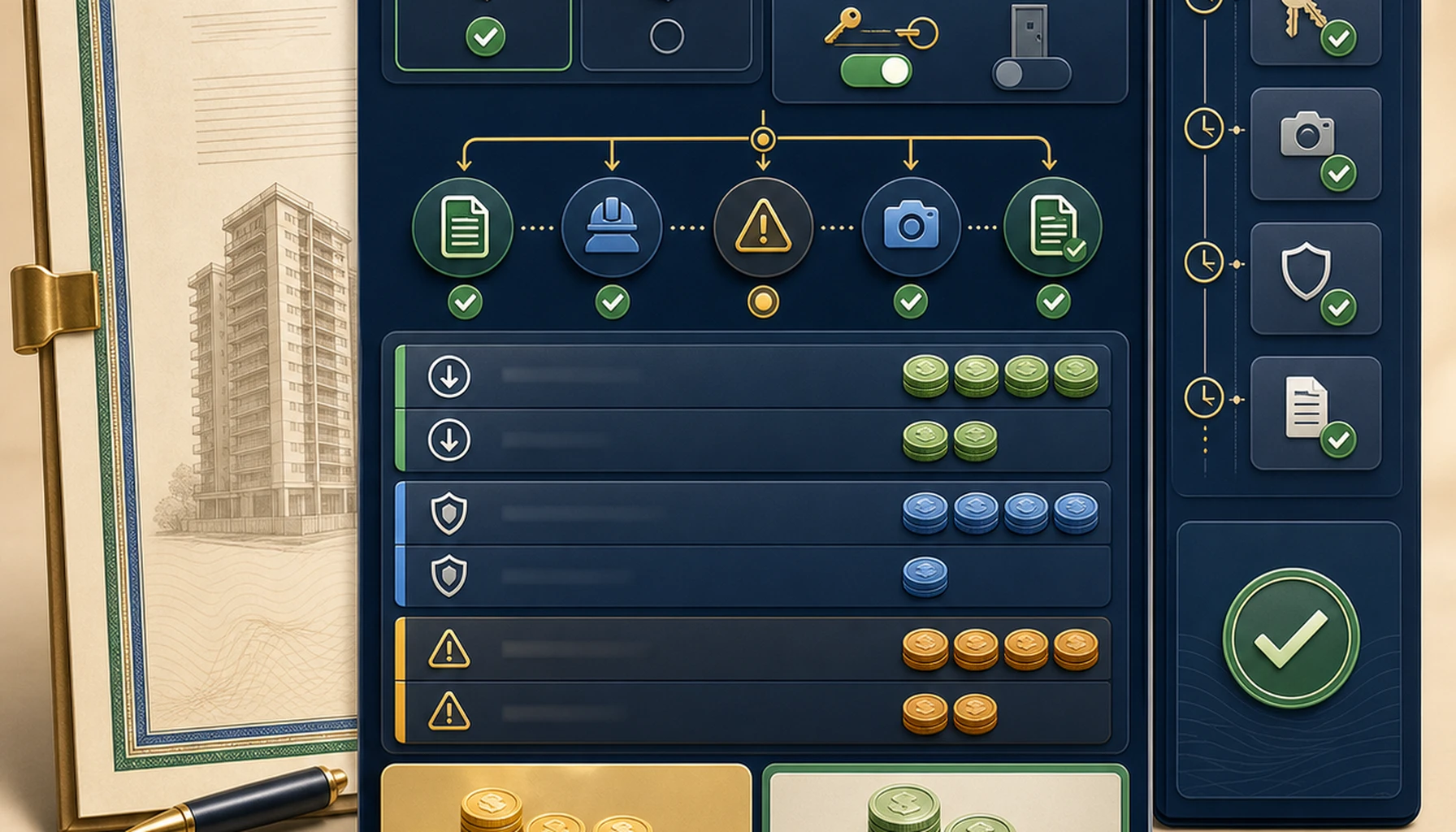
Hero image: place immediately below the introduction. Alt text: “Lei do Distrato calculation showing permitted retention and buyer refund in Brazilian reais.”
Key Takeaways
Brazil’s Distrato Law does not create one universal refund percentage. An incorporation may have a 25% or 50% contractual-penalty ceiling on sums paid, while a loteamento has a 10% ceiling on the updated contract value; documented charges can also affect the result. Source: Law 13,786/2018
- Law 13,786/2018 took effect on 28 December 2018.
- In an incorporation without patrimônio de afetação, the contractual penalty may reach 25% of amounts paid.
- In an affected incorporation, that ceiling may reach 50% of amounts paid.
- In a loteamento, the contractual penalty may reach 10% of the updated contract value.
- Possession can trigger occupation compensation of 0.5% per month of the updated contract value, calculated daily.
- Brokerage, taxes, condominium charges, association charges, and contractual expenses need a legal and documentary basis.
What is Brazil’s Distrato Law?
Brazil’s Distrato Law is Law 13,786/2018, effective from 28 December 2018. It sets statutory rules for ending purchase agreements involving real-estate incorporations and land subdivisions when a buyer withdraws or defaults, while preserving the importance of the contract and the facts of the case. Source: Law 13,786/2018
A distrato is the termination of a real-estate agreement before the transaction reaches its expected completion. In everyday use, the term can describe a mutual agreement or a termination caused by default. The reason for termination still matters.
The law answered a dispute that had filled Brazilian courts for years. It does not give a developer permission to retain whatever it wants. Nor does it promise a buyer the return of every instalment.
We recommend keeping the signed proposal, contract, amendments, payment ledger, notices, and brokerage receipt in one file. That habit looks dull until a refund calculation is challenged.
For a developer, the impact extends beyond one buyer. A cancellation affects inventory, projected cash flow, sales reporting, and VGV. A current VGV analysis should distinguish gross signed sales from sales that remain exposed to cancellation.
How much may an incorporator retain after cancellation?
Under Article 67-A of Law 4,591/1964, an incorporation may provide for a contractual penalty of up to 25% of amounts paid when there is no patrimônio de afetação, or up to 50% when that regime applies, plus legally listed deductions when applicable. Source: Law 13,786/2018
Patrimônio de afetação is the legal separation of a project’s land, construction, receivables, and obligations from the developer’s general assets. It is meant to protect the specific project and its buyers.
The project registration and related documents should show whether that regime applies. Don’t rely on a sales presentation alone.
The penalty is not always the entire settlement. Article 67-A can also cover items such as:
- brokerage, when the amount is disclosed and the service was provided;
- contractual expenses with a valid contractual and legal basis;
- taxes, condominium charges, and association contributions linked to the unit;
- occupation compensation of 0.5% per month of the updated contract value, calculated pro rata die, when the buyer had possession;
- other property-related charges legally assigned to the buyer.
Calling an internal cost an administrative expense does not make it deductible. The seller needs a traceable calculation and documents the buyer can inspect.

Worked example: affected incorporation
A buyer paid R$200,000 for an apartment in an affected project. The contract sets the penalty at 50%, the buyer never took possession, and R$8,000 in disclosed brokerage is treated separately.
| Item | Amount |
|---|---|
| Amounts paid | R$200,000 |
| Penalty retained at 50% | R$100,000 |
| Disclosed brokerage | R$8,000 |
| Taxes, condominium, and occupation compensation | R$0 |
| Illustrative refund | R$92,000 |
This is not a universal formula. If brokerage was already included in the amount used to calculate the penalty, deducting it again can create an improper double deduction. We would stop there and reconcile the payment base before approving the statement.
What can be retained in a loteamento cancellation?
For a loteamento, Article 32-A of Law 6,766/1979 allows a contractual penalty of up to 10% of the updated contract value, not 25% or 50% of amounts paid. Brokerage and listed property-related charges may also enter the calculation when the contract and records support them. Source: Law 13,786/2018
A loteamento is a land subdivision that creates building lots and public areas under Law 6,766/1979. It is legally different from an apartment incorporation.
That difference changes the calculation. Applying an incorporation percentage to a lot sale is a common and costly error.
Article 32-A identifies items that may include brokerage, taxes, association charges, use or enjoyment of the lot, and contractual expenses. The law also provides a refund structure that can involve 12 monthly instalments after the applicable statutory waiting period. Dates depend on the contract and case facts.
| Contract type | Main statutory reference |
|---|---|
| Incorporation without patrimônio de afetação | Up to 25% of amounts paid, Article 67-A |
| Incorporation with patrimônio de afetação | Up to 50% of amounts paid, Article 67-A |
| Loteamento | Penalty up to 10% of updated contract value, Article 32-A |
Blog summaries often blend these regimes. The official statute is the starting point, not the final confirmation for a live dispute.
The law also provides a refund structure that can involve 12 monthly instalments after the applicable statutory waiting period.
How should the settlement be calculated?
A defensible distrato settlement identifies the legal regime before calculating deductions. It then tests every line against the statute, the signed contract, payment records, possession evidence, and disclosed brokerage terms, producing a statement both parties can audit.
Use this sequence:
- Identify an incorporation or a loteamento.
- Confirm the signature date, amendments, and termination reason.
- Check whether patrimônio de afetação applies.
- Reconcile every amount actually paid, including down payment, instalments, FGTS funds, and financing flows.
- Test each deduction against Article 67-A or Article 32-A and the contract.
- Verify possession dates, tax bills, condominium statements, association charges, and brokerage disclosure.
- Issue a line-by-line settlement statement with the refund amount, correction method, and payment schedule.
I don’t treat a spreadsheet as proof. It can catch arithmetic errors, but it cannot decide whether a charge is lawful.
Keep assumptions visible. A reviewer should immediately see the legal ceiling used, whether possession occurred, and whether brokerage appears once or twice.

Talk to a specialist
Want to see this applied to your case?
Instead of finishing the article and staying in theory, send us your situation on WhatsApp. We reply with the concrete next step.
Why do possession and brokerage change the refund?
Possession and brokerage can change the refund because Article 67-A treats property use and an identified brokerage service as economic items separate from the contractual penalty. Possession may support occupation compensation; brokerage requires clear disclosure and proof of the service. Sources: Law 13,786/2018 and Superior Court of Justice, Theme 938
When a buyer had possession, the statutory reference is 0.5% per month of the updated contract value, calculated proportionally by day. It is compensation for use of the unit, not a late-payment fine.
Brokerage needs its own review. The Superior Court of Justice has addressed passing brokerage costs to buyers in its repetitive-case guidance, with clear prior information about the amount as a central issue.
Our rule for a settlement worksheet is simple: name the service, show the amount, and retain the evidence. Surprises turn routine calculations into disputes.
What should a distrato statement show?
A distrato statement should identify the contract, payment history, legal regime, every deduction, correction index, refund amount, and payment schedule. Each figure needs a date, formula, and supporting document so the buyer, developer, lawyer, or auditor can reproduce the calculation.
A good statement is boring. That is a compliment.
Include at least:
- buyer and unit identification;
- contract and amendment dates;
- incorporation or loteamento classification;
- patrimônio de afetação status;
- payment amounts and dates;
- penalty percentage and statutory basis;
- brokerage, taxes, condominium, association, and occupation entries;
- correction index, refund deadline, and instalment schedule.
A buyer should obtain independent Brazilian real-estate legal advice before signing a release of claims. Developers should also have counsel review templates where there are allegations of delay, misleading sales information, or seller-side breach.
How can Imovitec help make cancellation risk visible?
A legally correct distrato settlement still creates a business question: what happens when the returned unit re-enters supply? Imovitec’s Radar Imobiliário tracks launches, sales tables, price movements, appreciation, VGV, and sales velocity so market decisions can be based on current evidence rather than guesswork.
That is where legal and commercial teams should meet. In our market work, a returned unit is never just a refund number; it can alter absorption, price positioning, and the next launch decision.
Use a reliable cancellation ledger alongside property appreciation analysis, sales-table analysis, and sales velocity. If your team needs a local market read before repricing or relaunching inventory, request an Imovitec market briefing at imovitec.ai.
This article is informational and is not legal advice. For a real termination, consult a Brazilian real-estate lawyer and review the official statutory text.
FAQ
How much can a developer retain under Brazil’s Distrato Law?
Brazil’s Distrato Law does not impose a single refund rate. For an off-plan incorporation, the contract may retain up to 25% of amounts paid as a penalty, or up to 50% when the development is under patrimônio de afetação. Brokerage, taxes, condominium charges, and possession-related costs may also affect the final refund.
Does the buyer receive all money back after cancelling an off-plan property purchase?
A buyer is generally entitled to a partial refund, not necessarily an immediate full refund. The applicable deadline and deductions depend on whether the project is an incorporation or loteamento, the contract terms, and whether it has patrimônio de afetação. Developers should calculate the result from documented payments and legally permitted charges.
How do I calculate what can be retained in a property cancellation in Brazil?
Start by identifying the project’s legal regime and the buyer’s payment history. For incorporations, apply the contractual penalty within the statutory ceiling, then assess disclosed brokerage, charges, and any possession-related amounts. For loteamentos, Article 32-A has its own rules. A transaction-specific legal review remains essential.
Can brokerage commission be retained in a real-estate distrato?
Brokerage commission may be retained when it was clearly disclosed and separately agreed in the purchase contract. The deduction should be supported by contractual evidence and payment records, rather than applied automatically. Clear commission disclosure reduces disputes and helps developers explain the buyer’s refund calculation with greater transparency.
What happens if the buyer had possession of the property before cancellation?
Possession can create additional deductions because the buyer may be responsible for property-related charges and compensation for use during that period. The calculation should consider the date possession began, taxes, condominium fees, and the contractual handover terms. Records of keys, inspections, and payments are central to a defensible settlement.
Can a developer reduce distrato losses without creating more litigation?
Yes, a standardized, evidence-based distrato process can reduce avoidable losses and disputes. Teams should classify the project correctly, apply statutory retention limits, document each deduction, and communicate refund timing clearly. This improves operational predictability while helping protect revenue, customer relationships, and compliance across the sales portfolio.
Is compliance with Law 13,786/2018 too complex for large real-estate portfolios?
Compliance becomes manageable when legal rules are converted into consistent data and workflow controls. Developers need reliable visibility into contract type, patrimônio de afetação status, amounts paid, commissions, possession, and charges. Centralized monitoring helps identify exceptions early and supports more accurate decisions without treating every cancellation as an isolated case.
How can Imovitec help with Brazil’s Distrato Law and retention analysis?
Imovitec helps real-estate businesses turn distrato exposure into actionable market and portfolio intelligence. Its data-led approach can support project segmentation, commercial monitoring, and clearer analysis of cancellation patterns alongside legal counsel. That visibility helps teams evaluate retention risk, improve planning, and make better-informed decisions across developments.
Related reading
Talk to a specialist
Have a real case to solve?
Message Imovitec on WhatsApp. We reply fast and already speak your context — no forms, no waiting.
Frequently asked questions
How much can a developer retain under Brazil’s Distrato Law?
Brazil’s Distrato Law does not impose a single refund rate. For an off-plan incorporation, the contract may retain up to 25% of amounts paid as a penalty, or up to 50% when the development is under patrimônio de afetação. Brokerage, taxes, condominium charges, and possession-related costs may also affect the final refund.
Does the buyer receive all money back after cancelling an off-plan property purchase?
A buyer is generally entitled to a partial refund, not necessarily an immediate full refund. The applicable deadline and deductions depend on whether the project is an incorporation or loteamento, the contract terms, and whether it has patrimônio de afetação. Developers should calculate the result from documented payments and legally permitted charges.
How do I calculate what can be retained in a property cancellation in Brazil?
Start by identifying the project’s legal regime and the buyer’s payment history. For incorporations, apply the contractual penalty within the statutory ceiling, then assess disclosed brokerage, charges, and any possession-related amounts. For loteamentos, Article 32-A has its own rules. A transaction-specific legal review remains essential.
Can brokerage commission be retained in a real-estate distrato?
Brokerage commission may be retained when it was clearly disclosed and separately agreed in the purchase contract. The deduction should be supported by contractual evidence and payment records, rather than applied automatically. Clear commission disclosure reduces disputes and helps developers explain the buyer’s refund calculation with greater transparency.
What happens if the buyer had possession of the property before cancellation?
Possession can create additional deductions because the buyer may be responsible for property-related charges and compensation for use during that period. The calculation should consider the date possession began, taxes, condominium fees, and the contractual handover terms. Records of keys, inspections, and payments are central to a defensible settlement.
Can a developer reduce distrato losses without creating more litigation?
Yes, a standardized, evidence-based distrato process can reduce avoidable losses and disputes. Teams should classify the project correctly, apply statutory retention limits, document each deduction, and communicate refund timing clearly. This improves operational predictability while helping protect revenue, customer relationships, and compliance across the sales portfolio.
Is compliance with Law 13,786/2018 too complex for large real-estate portfolios?
Compliance becomes manageable when legal rules are converted into consistent data and workflow controls. Developers need reliable visibility into contract type, patrimônio de afetação status, amounts paid, commissions, possession, and charges. Centralized monitoring helps identify exceptions early and supports more accurate decisions without treating every cancellation as an isolated case.
How can Imovitec help with Brazil’s Distrato Law and retention analysis?
Imovitec helps real-estate businesses turn distrato exposure into actionable market and portfolio intelligence. Its data-led approach can support project segmentation, commercial monitoring, and clearer analysis of cancellation patterns alongside legal counsel. That visibility helps teams evaluate retention risk, improve planning, and make better-informed decisions across developments.
Imovitec
Turn data into next steps.
Take the Imovitec diagnostic and see where your best opportunities are.