Off-Plan Assignment in Brazil: Step-by-Step Process and Costs
An off-plan assignment, known in Brazil as repasse na planta, lets an original buyer transfer a contract position before handover. It can release cash early…
Imovitec · July 18, 2026
An off-plan assignment, known in Brazil as repasse na planta, lets an original buyer transfer a contract position before handover. It can release cash early. It can also leave both parties exposed if the developer has not approved the change or the corrected balance was misunderstood.

This is not the sale of a completed, registered apartment. The buyer is transferring rights and obligations under a purchase contract while construction is still underway.
When I review a repasse, I start with the signed contract, not the asking price. That document tells you what can be assigned, who must approve it, and which charges may still appear.
Key Takeaways
A Brazilian off-plan assignment transfers the original purchaser’s contractual position to a replacement buyer, usually subject to the developer’s written approval. The incoming buyer pays the agreed amount to the seller and assumes the corrected balance and future instalments. Civil Code Articles 286–298 provide the legal reference for assignment of credit.
- Written developer approval is the practical checkpoint that protects both parties.
- The buyer’s cost is the seller payment plus the corrected balance, fees, taxes, and future payments.
- A premium, or ágio, can create taxable capital gain for the seller.
- Article 290 of Brazil’s Civil Code states that an assignment is ineffective against the debtor until it is notified.
- Compare the all-in price with current developer inventory and nearby launches before accepting a premium.
What is an off-plan assignment in Brazil?
An off-plan assignment is the transfer of a buyer’s rights and obligations under a property-under-construction contract to another buyer. The new buyer takes over the agreed payment schedule and the right to receive the unit, provided the developer records or accepts the transfer under the original contract.
Assignment of rights: transfer of a contractual position; it is not, by itself, transfer of registered ownership at the Land Registry.
Brazil’s Civil Code, Law No. 10,406/2002, addresses assignment of credit in Articles 286 through 298. Article 290 is especially relevant: the assignment does not take effect against the debtor until notification. In a repasse, the developer is the party that must recognize the incoming buyer. Source: Civil Code, Articles 286–298 and 290.
Three parties are involved: the original buyer (cedente), the incoming buyer (cessionário), and the developer or incorporator. The developer may require credit documents or refuse a candidate under the contract’s stated rules.
Don’t call every payment to the seller profit. Part of it may simply reimburse deposits, instalments, and documented contract expenses already paid.
For price context, read Imovitec’s guide to evaluating property appreciation.
How does a repasse na planta work step by step?
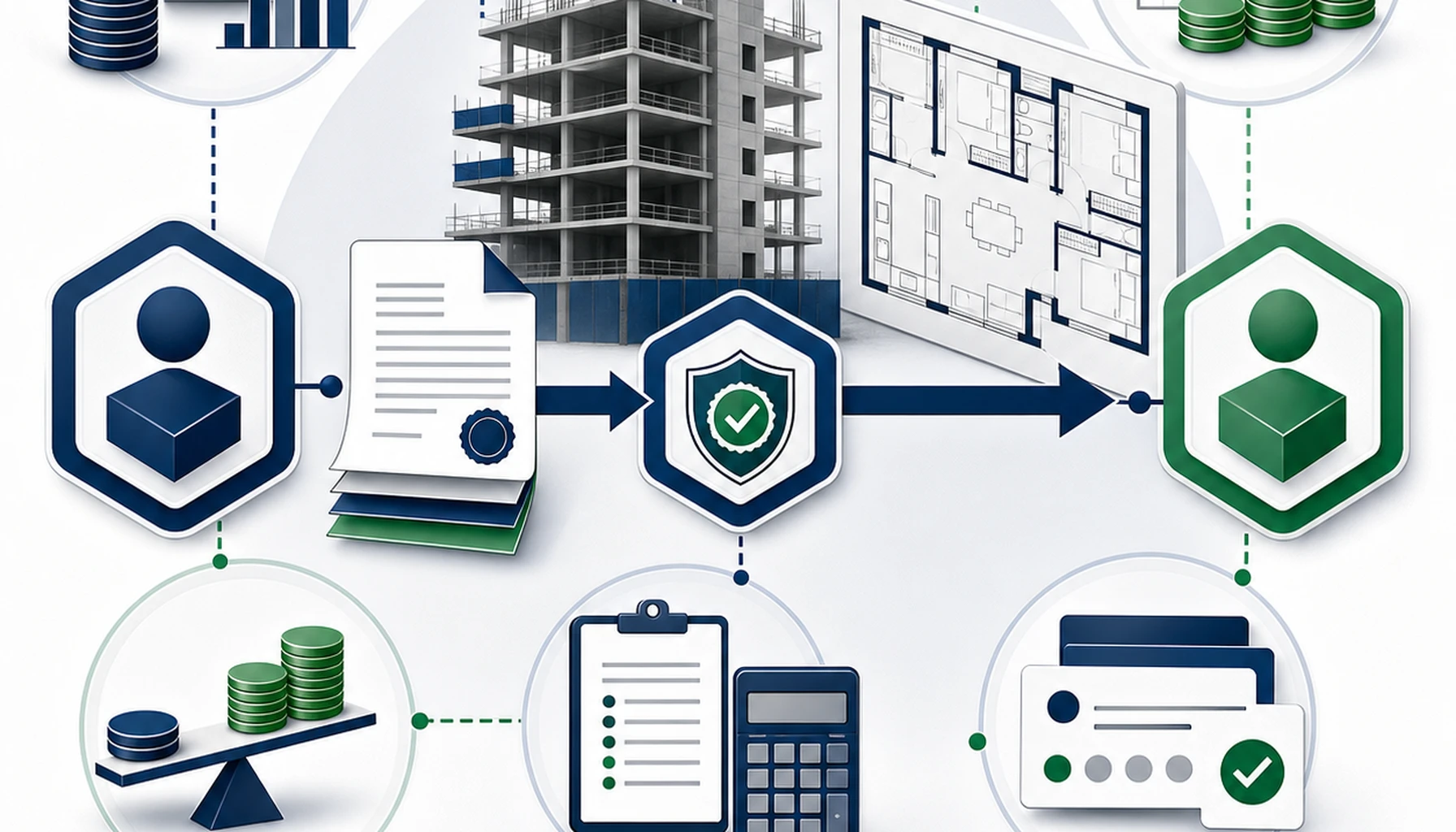
A safe repasse follows seven documented stages: inspect the original contract, obtain an updated balance, set the commercial price, submit the new buyer for approval, sign the assignment, make traceable payments, and obtain written developer acknowledgement. Skipping the approval step creates the clearest avoidable risk.
Here is the process I recommend:
- Request the full contract file. Obtain the signed agreement, amendments, payment receipts, current boleto or statement, construction schedule, and developer notices.
- Read the assignment clause. Confirm consent rules, transfer fees, credit approval, and whether arrears block the transaction.
- Request an updated balance statement. It should separate overdue amounts, future instalments, balloon payments, penalties, and the correction index.
- Separate reimbursement from premium. State clearly what repays prior amounts and what represents the agreed ágio.
- Send the incoming buyer for approval. Developers commonly ask for identification, income, address, and marital-status documents.
- Sign an assignment agreement. Identify the unit, original contract, payment split, liabilities, approval condition, deadlines, and default consequences.
- Pay and formalize the change. Use identified bank transfers. Obtain an amendment, assignment term, or written consent naming the new buyer.
Timing matters. A monthly correction date can change the outstanding balance between a quote and the issued boleto.
The Getulio Vargas Foundation publishes the National Construction Cost Index, known as INCC. Your contract determines the applicable index, base date, and affected instalments—not a generic online calculator. Source: Fundação Getulio Vargas, INCC. See also Imovitec’s guide to property correction indexes.
Which costs should seller and buyer calculate?
The total buyer cost equals the payment to the seller, corrected developer balance, transfer charges, legal or tax costs, and future financing costs where applicable. A low entry payment can hide an expensive contract. Price the whole obligation, not just the amount due today.
Corrected outstanding balance: the amount still payable to the developer under the contract’s index and payment calendar.
Total acquisition cost = seller payment
- corrected developer balance
- transfer or analysis fee
- taxes and legal costs
- future financing costs, if any
Seller payment = documented amounts paid + agreed premium (ágio)
For the seller, use a separate net-proceeds sheet. Include brokerage, receipts for acquisition costs, seller-paid fees, and potential capital-gains tax. I don’t describe an ágio as tax-free without a Brazilian accountant reviewing the facts.
Brazil’s Receita Federal provides GCAP guidance for capital-gain reporting. Treatment depends on the transaction, records, ownership details, and any applicable exemption. Source: Receita Federal, Ganhos de Capital and GCAP.
Why must the developer approve the transfer?
Developer approval confirms that the incoming buyer has replaced the original buyer under the contract’s agreed terms. Without written acknowledgement, the original buyer may remain exposed to instalments, penalties, and disputes after receiving payment. Consent turns a private deal into an operational contract change.
Developer consent: written confirmation that the incorporator accepts the incoming buyer and records the assignment under the project contract.
It is not empty paperwork. The developer needs to know who will receive notices, make payments, and sign handover documents.
Ask in writing:
- Is the unit current on all payments?
- Which documents does the incoming buyer need?
- What is the fee, and which contract clause supports it?
- Will the developer issue a new contract or an amendment?
- Does the seller remain jointly liable after approval?
- What happens if approval is denied after a deposit?
Brazil’s Consumer Protection Code, Law No. 8,078/1990, requires clear information and bars abusive practices. It does not erase a clause simply because a party failed to read it. Make the main payment conditional on written approval. Source: Consumer Protection Code.

Talk to a specialist
Want to see this applied to your case?
Instead of finishing the article and staying in theory, send us your situation on WhatsApp. We reply with the concrete next step.
How do you decide whether the premium is fair?
A fair premium reflects the unit’s current market position, construction progress, remaining debt, delivery date, and competing options. The seller’s hoped-for return does not establish market value. The relevant comparison is the repasse’s all-in cost against current alternatives.
Ágio: the negotiated amount above the seller’s reimbursable investment for assigning the contract position.
Compare units in the same project with nearby launches. Area, floor, sunlight, parking, delivery date, and payment terms all matter. Two units with the same square metres can attract very different demand.
We’ve seen a common trap: an assignment looks inexpensive because the initial seller payment is low, but the corrected balance makes it dearer than unsold developer inventory. I test both side by side before forming an opinion.
Read buying an off-plan property for further due diligence, then use a real-estate market analysis to test local supply and pricing.
What documents and risks should you check before signing?
Before signing, verify the original contract, payment history, current balance statement, developer approval rules, identity documents, and liability clauses. The central danger is paying for a contractual position the developer will not recognize, or taking on a debt larger than the parties disclosed.
Ask for documents, not screenshots:
- Original contract and every amendment;
- Receipts and a developer-issued balance statement close to signing;
- Construction status and revised delivery notices;
- Assignment rules and fee table;
- Identity, marital-status, and representation documents;
- Draft assignment and developer consent;
- Clear brokerage, deposit, and refund terms.
Law No. 4,591/1964 regulates condominium incorporations. Article 67-A addresses withdrawal and default consequences in certain incorporated-property contracts, which makes it important to understand your own exit risk before taking over a contract. Source: Law No. 4,591/1964, Article 67-A.
I prefer a conditional-payment clause or escrow-like arrangement when the amounts are material. Documentation takes time. A dispute takes longer.
Article 290 is especially relevant: the assignment does not take effect against the debtor until notification.
Make the decision with current local evidence
A repasse is worth considering when the unit, corrected balance, delivery risk, and total cost compare well with current local alternatives, and the developer formally accepts the incoming buyer. National averages rarely answer that unit-level question. Local inventory and launch data do.
Imovitec’s Radar Imobiliário tracks launches, sales tables, price movements, appreciation, VGV, and sales velocity in Brazil. If you are setting an ágio or comparing an assignment with developer stock, an Imovitec market briefing can ground the decision in local evidence rather than one listing. Learn more at imovitec.ai.
A good decision is specific: this unit, this balance, this delivery risk, and this local supply. Keep the contract, balance statement, and tax records together from day one.
This article is educational information, not legal, accounting, or investment advice. Ask a Brazilian real-estate lawyer and accountant to review the contract and tax position before signing.
FAQ
How does an off-plan assignment work in Brazil?
An off-plan assignment transfers the original buyer’s contractual rights and obligations before handover. In Brazil, the incoming buyer pays any agreed premium to the seller and assumes the corrected outstanding balance and future instalments, but the transfer normally becomes effective only after the developer formally approves the substitution.
Does an off-plan assignment need developer approval?
Developer approval is usually essential because the purchase contract commonly requires the developer’s written consent to replace the buyer. The developer reviews the incoming buyer’s documentation and credit profile, calculates applicable transfer charges, and issues an amendment or assignment instrument confirming who is responsible for the remaining balance.
How do I calculate the cost of a repasse na planta?
The total cost equals the negotiated amount paid to the original buyer, the updated outstanding balance, future instalments, transfer fees, taxes, registry costs where applicable, and financing expenses. Ask the developer for a current payoff statement, since contractual indexation can materially change the balance between negotiation and approval.
What documents are required for an off-plan assignment?
A complete assignment normally requires the original purchase contract, payment history, developer’s balance statement, identification and civil-status documents, proof of income, and the developer’s consent forms. Married buyers may need spouse documentation, while corporate purchasers may need organizational documents and authority evidence before the developer approves the transfer.
Is tax due on the premium paid in an off-plan assignment?
Tax may apply to the seller’s gain on the premium, depending on the transaction structure and the seller’s tax position. The parties should also confirm whether local transfer tax, developer charges, or later registration costs apply. A tax professional can assess the transaction before funds are released.
Is a repasse na planta worth it after fees and corrected balances?
A repasse can be worthwhile only when the buyer compares the full all-in cost with current market value, future payment capacity, and delivery risk. A low premium can be misleading if the corrected balance, transfer fee, and upcoming instalments are high. Model the cash flow before making an offer.
What is the safest way to complete an off-plan assignment?
The safest approach is to make payment conditional on written developer approval and verified contract data. Confirm the seller’s payment status, obtain the updated balance directly from the developer, define who pays each fee, and execute the assignment documents before releasing material amounts to the seller.
How can Imovitec help with an off-plan assignment in Brazil?
Imovitec helps investors and real-estate businesses assess off-plan assignments with clearer market, pricing, and transaction intelligence. Its analysis can support premium benchmarking, cost scenarios, and opportunity screening, helping decision-makers evaluate whether a repasse aligns with local demand, risk tolerance, and expected returns before proceeding.
Related reading
Talk to a specialist
Have a real case to solve?
Message Imovitec on WhatsApp. We reply fast and already speak your context — no forms, no waiting.
Frequently asked questions
How does an off-plan assignment work in Brazil?
An off-plan assignment transfers the original buyer’s contractual rights and obligations before handover. In Brazil, the incoming buyer pays any agreed premium to the seller and assumes the corrected outstanding balance and future instalments, but the transfer normally becomes effective only after the developer formally approves the substitution.
Does an off-plan assignment need developer approval?
Developer approval is usually essential because the purchase contract commonly requires the developer’s written consent to replace the buyer. The developer reviews the incoming buyer’s documentation and credit profile, calculates applicable transfer charges, and issues an amendment or assignment instrument confirming who is responsible for the remaining balance.
How do I calculate the cost of a repasse na planta?
The total cost equals the negotiated amount paid to the original buyer, the updated outstanding balance, future instalments, transfer fees, taxes, registry costs where applicable, and financing expenses. Ask the developer for a current payoff statement, since contractual indexation can materially change the balance between negotiation and approval.
What documents are required for an off-plan assignment?
A complete assignment normally requires the original purchase contract, payment history, developer’s balance statement, identification and civil-status documents, proof of income, and the developer’s consent forms. Married buyers may need spouse documentation, while corporate purchasers may need organizational documents and authority evidence before the developer approves the transfer.
Is tax due on the premium paid in an off-plan assignment?
Tax may apply to the seller’s gain on the premium, depending on the transaction structure and the seller’s tax position. The parties should also confirm whether local transfer tax, developer charges, or later registration costs apply. A tax professional can assess the transaction before funds are released.
Is a repasse na planta worth it after fees and corrected balances?
A repasse can be worthwhile only when the buyer compares the full all-in cost with current market value, future payment capacity, and delivery risk. A low premium can be misleading if the corrected balance, transfer fee, and upcoming instalments are high. Model the cash flow before making an offer.
What is the safest way to complete an off-plan assignment?
The safest approach is to make payment conditional on written developer approval and verified contract data. Confirm the seller’s payment status, obtain the updated balance directly from the developer, define who pays each fee, and execute the assignment documents before releasing material amounts to the seller.
How can Imovitec help with an off-plan assignment in Brazil?
Imovitec helps investors and real-estate businesses assess off-plan assignments with clearer market, pricing, and transaction intelligence. Its analysis can support premium benchmarking, cost scenarios, and opportunity screening, helping decision-makers evaluate whether a repasse aligns with local demand, risk tolerance, and expected returns before proceeding.
Imovitec
Turn data into next steps.
Take the Imovitec diagnostic and see where your best opportunities are.