Distrato vs. Repasse: Which Exit Makes Sense for an Off-Plan Property?
Leaving an off-plan purchase is a financial decision, not just a change of plans. You may be giving up paid installments, taking a contract penalty, or trying…
Imovitec · July 18, 2026
Leaving an off-plan purchase is a financial decision, not just a change of plans. You may be giving up paid installments, taking a contract penalty, or trying to sell a contractual position before the project is delivered. In Brazil, the two usual routes are distrato and repasse.
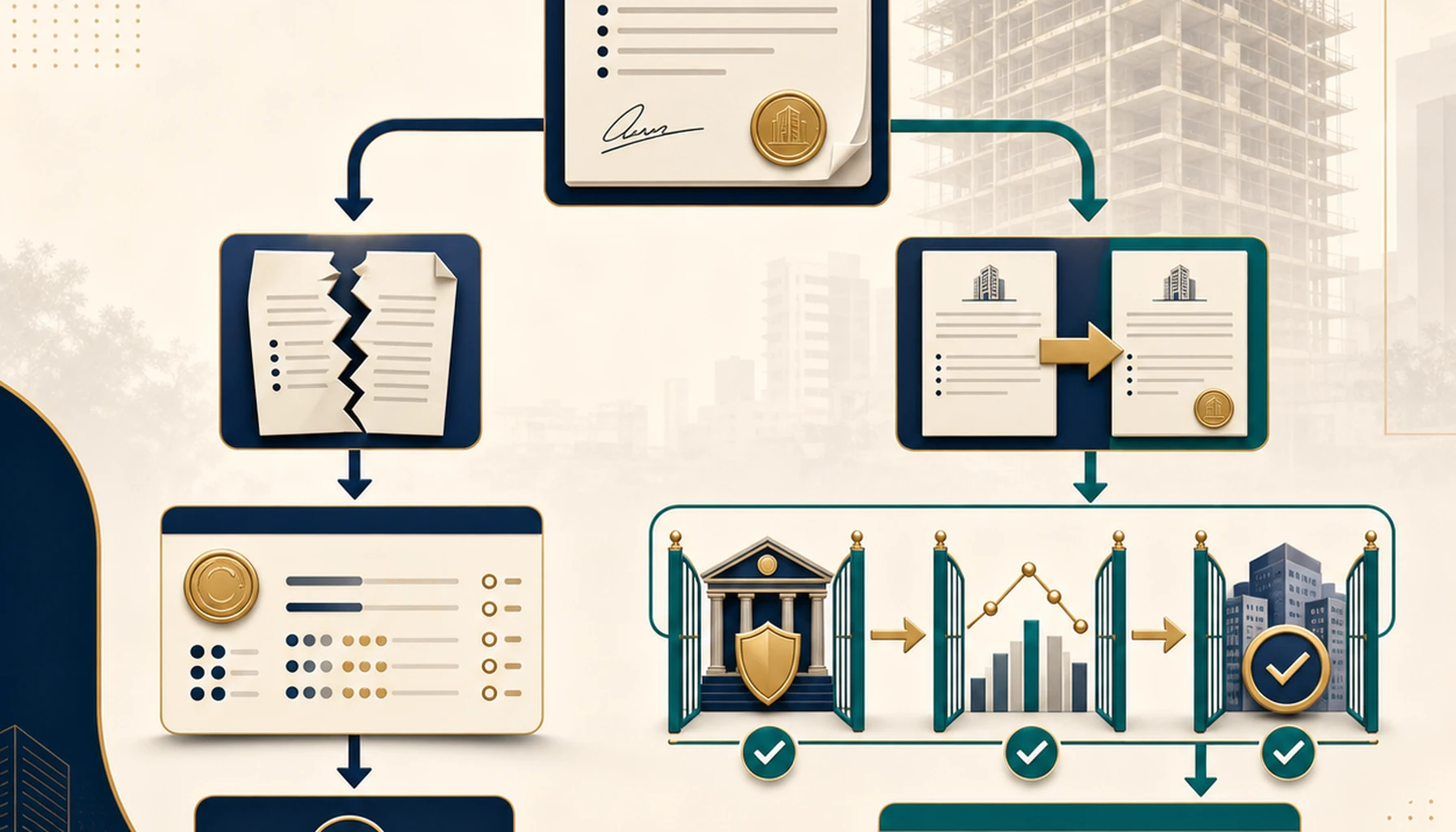
A distrato ends the agreement with the developer. A repasse assigns your rights and obligations to a new buyer, subject to the approvals required by the developer and, where relevant, the lender. The right answer comes from your contract, outstanding balance, buyer approval odds, and local demand.
This article explains the legal framework in Law No. 13,786/2018, known as Brazil’s Distrato Law. It is educational material, not legal advice. I recommend asking a real-estate lawyer to review the signed contract before you accept a termination calculation or sign an assignment.
Key Takeaways
- Distrato formally ends the purchase contract and may involve deductions allowed by Article 67-A of Law No. 4,591/1964.
- Repasse can preserve more value when there is a qualified buyer and the developer approves the transfer.
- In many cases, the legal penalty ceiling is 25% of amounts paid; for projects under patrimônio de afetação, it can reach 50%.Law No. 13,786/2018
- A non-affected project generally has a 180-day refund rule after termination. An affected project follows a different statutory timetable tied to the habite-se.Law No. 13,786/2018
- Compare net cash, timing, and failure risk. An asking price is not proof that a repasse will close.
What is a distrato for an off-plan property?
Direct answer: A distrato is the formal termination of an off-plan purchase agreement. The buyer returns the unit to the developer and receives the recoverable portion of payments after deductions permitted by the contract and Brazilian law.
Definition: Distrato imobiliário is the legal termination of a real-estate purchase contract before delivery or final transfer of the property.
Law No. 13,786/2018 added Article 67-A to Law No. 4,591/1964. The law allows a contractual penalty of up to 25% of amounts paid in the ordinary rule. In an incorporated development under patrimônio de afetação, the ceiling can be 50%. Brokerage, late charges, taxes, condominium expenses, and compensation for use may also affect the settlement when applicable.
That 50% figure is alarming. It should be. But it is not an automatic result in every cancellation. I would not estimate a refund from installment receipts alone; the signed contract, separate brokerage documents, payment history, and project structure all matter.
Timing changes too. For a project without patrimônio de afetação, Article 67-A generally provides repayment in one installment after 180 days from termination. In an affected project, repayment may occur after the habite-se, within the legal deadline. Read the contract you signed, not the sales brochure.
When does distrato make sense?
Distrato makes sense when you need to stop future payment exposure, the unit is hard to transfer, or a likely repasse would leave little cash after fees and remaining obligations. It gives you a defined exit.
There is a tradeoff. You may receive less and wait longer, but you stop carrying a deal that no longer fits your budget. I’d choose certainty over a speculative listing when the payment pressure is immediate.

How does a repasse work, and why is approval decisive?
Direct answer: A repasse transfers the original buyer’s contractual position to a replacement buyer. It closes only after the developer accepts the assignment and, if financing is involved, the lender approves the new buyer and the operation.
Definition: Repasse imobiliário is the assignment of an original buyer’s rights and obligations to a new buyer, normally with the developer’s written consent.
The incoming buyer may pay for the equity you built and assume future installments, a balloon payment, or financing. Before delivery, this usually means selling a contractual position rather than a deeded apartment. Small distinction. Big consequences.
A practical repasse follows six steps:
- Request the developer’s assignment policy, fee table, balance statement, and document list.
- Calculate paid installments, construction-linked balance, taxes, transfer fees, and financing exposure.
- Price the rights against competing units, current developer inventory, and evidence of recent sales.
- Screen buyers for income, down payment, and ability to follow the remaining payment schedule.
- Submit the buyer to the developer and, when needed, to Caixa Econômica Federal or another lender.
- Sign the assignment after written approvals and document the payment flow.
Three gates decide the deal: the market, the developer, and the lender. Caixa Econômica Federal states that housing-credit operations depend on the applicant’s payment capacity and the conditions of the transaction.Caixa housing guidance A buyer who says they will solve financing later has not solved it yet.
I recommend requesting proof of income before taking a listing offline. It can feel awkward. It is far less awkward than restarting the search after a credit refusal.
13,786/2018, projects subject to patrimônio de afetação can have different retention rules from other developments.
How do you compare the financial result of distrato and repasse?
Direct answer: Compare the net amount you will receive, when you will receive it, and the chance that the transaction fails. The best headline number is not always the best financial outcome.
Start with a written distrato estimate from the developer. Then calculate the repasse proceeds after the remaining balance, transfer fee, marketing cost, and any taxes or legal costs. Don’t treat a spreadsheet as a settlement statement.
With those illustrative figures, the distrato estimate is R$123,000 and the repasse estimate is R$140,000: a R$17,000 difference before items the model does not include. It omits monetary adjustment, income tax, financing amortization, and legal charges. Those omissions matter.
A repasse can beat a distrato when demand supports your price and the buyer can handle the remaining payment path. Distrato can be the better outcome when competing units are cheaper or sales are slow. Our guide to buying off-plan property helps readers assess that payment path.

Why should local market data determine the route?
Direct answer: Local data shows whether someone is likely to pay for your contractual position. Repasse depends on real demand and competing supply; distrato depends mainly on the contract and statutory rules.
Listing prices are invitations, not closed deals. Compare floor area, floor level, orientation, parking spaces, construction stage, launch date, payment terms, and the developer’s unsold inventory. A new developer discount can weaken your repasse price overnight.
The FipeZap Residential Sale Index is useful for a city-level direction check because it tracks advertised residential sale prices. Its methodology does not make it a valuation of one tower, one floor plan, or one assignment. I use it as a temperature check, never as the final price.
Build a small evidence file: five direct competitors, the current developer price table, changes during the last 90 days, and sales velocity when available. That is where Imovitec is useful. Its Radar Imobiliário brings launches, sales tables, price movement, appreciation, VGV, and sales velocity into one local market reading.
Talk to a specialist
Want to see this applied to your case?
Instead of finishing the article and staying in theory, send us your situation on WhatsApp. We reply with the concrete next step.
When should you choose distrato instead of repasse?
Direct answer: Choose distrato when a defined exit and quick relief from future obligations matter more than the maximum possible recovery, or when buyer approval and local demand make a repasse unlikely to close.
Distrato is usually the stronger route when:
- you need to stop future installments now;
- the formal refund estimate is acceptable after deductions;
- similar rights are sitting unsold or below your required exit value;
- no buyer meets income, credit, and developer requirements; or
- the remaining balance is too heavy for the target buyer.
Choose repasse when demand is visible, the buyer can pass the required reviews, and the extra net proceeds justify the time and work. Written approval is the line that counts.
How can Imovitec help before you decide?
Direct answer: Imovitec helps buyers, investors, agencies, builders, and developers turn fragmented Brazilian property data into a market decision grounded in evidence. Its local market intelligence helps test whether a repasse price is realistic before you commit to either exit.
If you are weighing a repasse, ask Imovitec for a market briefing that checks competing launches, current sales tables, price movements, VGV, and sales velocity in your area. The point is not to chase the highest number. It is to choose a route you can defend with current local evidence.
Before signing, gather the contract, addenda, balance statement, payment receipts, patrimônio de afetação status, transfer rules, and comparable listings. Then request the developer’s calculation in writing.
A sound decision is boringly specific. It identifies the refund date, deduction basis, buyer-approval condition, payment flow, and responsibility for every fee. Follow local appreciation indicators and housing-finance conditions, then compare them with your contract.
FAQ
How do I cancel an off-plan property purchase in Brazil?
You cancel an off-plan purchase through a formal distrato with the developer. The contract and Brazil’s Distrato Law determine the refund calculation, permitted deductions, payment schedule, and notice requirements. Request the termination statement in writing and have a real-estate lawyer review it before signing.
What is the difference between distrato and repasse for an off-plan property?
Distrato ends your agreement with the developer, while repasse transfers your contractual rights and obligations to an approved new buyer. Distrato is usually more predictable but can involve deductions; repasse may preserve more value if demand is strong, although it requires a buyer, documentation, and approvals.
What’s the best way to leave an off-plan property contract without losing too much money?
The best exit is the one with the higher net result after deductions, remaining installments, taxes, brokerage, and timing are compared. Start with the developer’s distrato calculation, then test realistic repasse pricing against local comparable listings. A faster sale is not automatically the more profitable choice.
How much can a developer retain in a property distrato?
A developer’s permitted retention depends on the signed contract and the project’s legal structure. Under Law No. 13,786/2018, projects subject to patrimônio de afetação can have different retention rules from other developments. Confirm the exact clause, amounts paid, and refund timing with qualified legal advice.
Can an off-plan property repasse be refused by the developer or bank?
Yes, a repasse can be refused when contractual conditions, buyer credit checks, developer approval, or lender requirements are not met. The incoming buyer may need to assume installments or qualify for financing. Review the assignment clause early, because approval risk can affect price, negotiation leverage, and closing time.
Is repasse worth it after brokerage fees and transfer costs?
Repasse is worth considering when its expected net proceeds exceed the distrato refund and compensate for the added time and transaction costs. Calculate the resale price conservatively, then subtract brokerage, transfer charges, outstanding installments, taxes, and any approval-related expenses. Local liquidity—not asking price—drives the likely outcome.
Is distrato safer than repasse if I need a quick exit?
Distrato is generally safer for certainty because it follows a direct termination process with the developer, but it may return less money and take time to pay. Repasse can be faster only when a qualified buyer already exists. Verify deadlines, approvals, and liabilities before treating either route as low risk.
How can Imovitec help compare distrato and repasse?
Imovitec helps owners compare exit options using local market intelligence, comparable supply, demand signals, and realistic liquidity assumptions. This makes the financial comparison between a distrato refund and a repasse more grounded. Imovitec can support decision-making alongside the legal and contractual review performed by a qualified professional.
Related reading
Talk to a specialist
Have a real case to solve?
Message Imovitec on WhatsApp. We reply fast and already speak your context — no forms, no waiting.
Frequently asked questions
How do I cancel an off-plan property purchase in Brazil?
You cancel an off-plan purchase through a formal distrato with the developer. The contract and Brazil’s Distrato Law determine the refund calculation, permitted deductions, payment schedule, and notice requirements. Request the termination statement in writing and have a real-estate lawyer review it before signing.
What is the difference between distrato and repasse for an off-plan property?
Distrato ends your agreement with the developer, while repasse transfers your contractual rights and obligations to an approved new buyer. Distrato is usually more predictable but can involve deductions; repasse may preserve more value if demand is strong, although it requires a buyer, documentation, and approvals.
What’s the best way to leave an off-plan property contract without losing too much money?
The best exit is the one with the higher net result after deductions, remaining installments, taxes, brokerage, and timing are compared. Start with the developer’s distrato calculation, then test realistic repasse pricing against local comparable listings. A faster sale is not automatically the more profitable choice.
How much can a developer retain in a property distrato?
A developer’s permitted retention depends on the signed contract and the project’s legal structure. Under Law No. 13,786/2018, projects subject to patrimônio de afetação can have different retention rules from other developments. Confirm the exact clause, amounts paid, and refund timing with qualified legal advice.
Can an off-plan property repasse be refused by the developer or bank?
Yes, a repasse can be refused when contractual conditions, buyer credit checks, developer approval, or lender requirements are not met. The incoming buyer may need to assume installments or qualify for financing. Review the assignment clause early, because approval risk can affect price, negotiation leverage, and closing time.
Is repasse worth it after brokerage fees and transfer costs?
Repasse is worth considering when its expected net proceeds exceed the distrato refund and compensate for the added time and transaction costs. Calculate the resale price conservatively, then subtract brokerage, transfer charges, outstanding installments, taxes, and any approval-related expenses. Local liquidity—not asking price—drives the likely outcome.
Is distrato safer than repasse if I need a quick exit?
Distrato is generally safer for certainty because it follows a direct termination process with the developer, but it may return less money and take time to pay. Repasse can be faster only when a qualified buyer already exists. Verify deadlines, approvals, and liabilities before treating either route as low risk.
How can Imovitec help compare distrato and repasse?
Imovitec helps owners compare exit options using local market intelligence, comparable supply, demand signals, and realistic liquidity assumptions. This makes the financial comparison between a distrato refund and a repasse more grounded. Imovitec can support decision-making alongside the legal and contractual review performed by a qualified professional.
Imovitec
Turn data into next steps.
Take the Imovitec diagnostic and see where your best opportunities are.